Choral Repertoire and Reading Course Choral Weekend
In the frame of the third edition of the Summer Courses in Early Music, dedicated to Emilia Fadini and organized by the Scuola Musicale di Milano
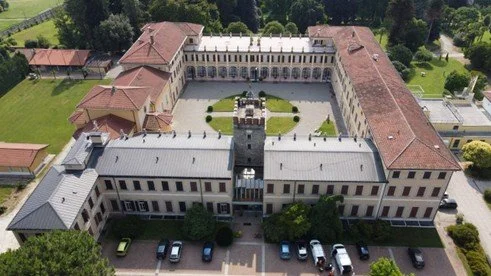
Barza d’Ispra (VA)
31st august to
6th september 2026
Alberto Odone
1.
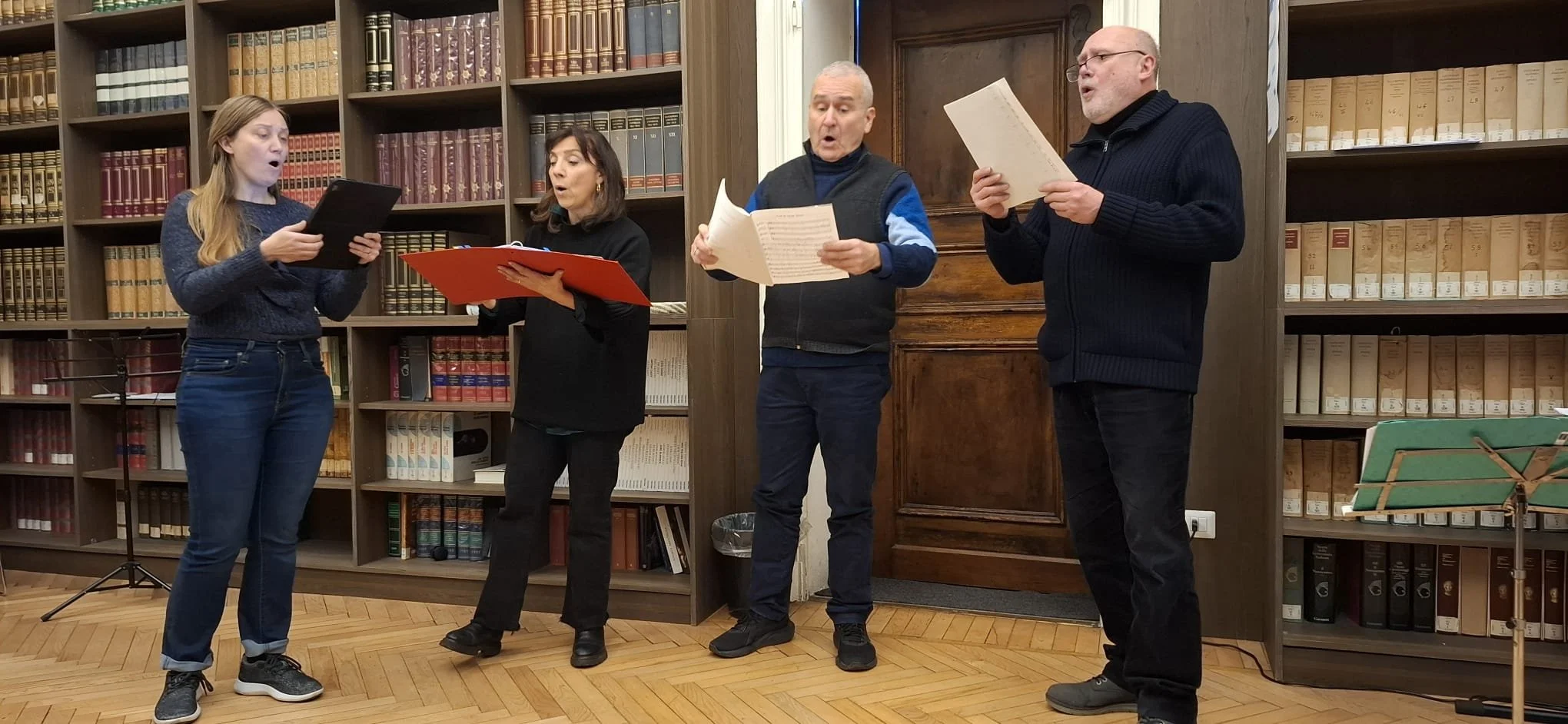
Choral Performance and Vocal Reading Course (Monday–Sunday morning)
The course focuses on the performance of vocal polyphony and includes works by the following composers and repertoires:
Alessandro Scarlatti (1660-1725) – motets and madrigals
John Dowland (1563-1626, on the 400th anniversary of his death) – songs for 2 and 4 voices
The Parisian chanson (16th-century, Claudin de Sermisy, Clément Janequin, Pierre Certon, Claude Le Jeune)
Antonio Lotti (1667-1740) – works for equal and mixed voices
The course is also open to beginners and will be structured, depending on the number of participants, with a combination of collective study sessions and small-group workshops.
Working on this repertoire will allow participants to become familiar with key aspects of the musical language of the different historical periods. At the same time, special attention will be given to developing a method for vocal sight-reading, mainly through the practice of Renaissance two-voice compositions (bicinia) by European composers.
Study materials for the polyphonic repertoire will be sent to participants in advance, in order to encourage active and informed participation.
From Friday onwards, the course will merge into the Choral Weekend activities (see below).
Final concert on the morning of Sunday, 6 September
2.
Choral Weekend (Friday–Sunday morning)
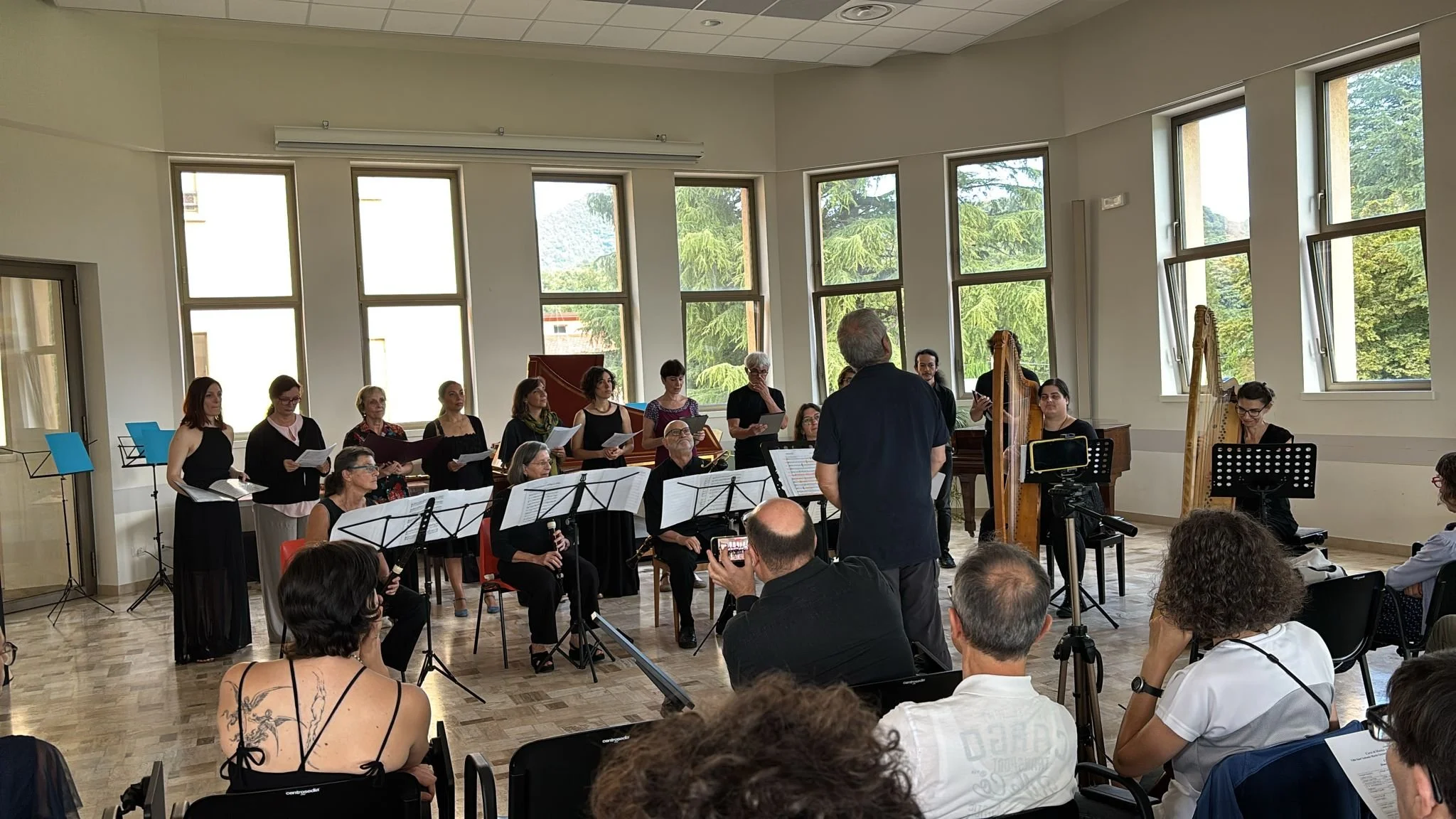
This course is open to everyone and is dedicated to the performance of choral polyphonic repertoire, both a cappella and with instrumental accompaniment. The programme includes:
Nicolas de Cellier de Hesdin (?-1538) – motets
The Parisian chanson (continuation)
An unpublished 18th-century Neapolitan work, performed with an instrumental ensemble
Study materials will be sent to participants in advance, to support active and informed participation.